The Veddw Garden Chronicles: Unveiling "The New Garden" in an Enduring Horticultural Saga
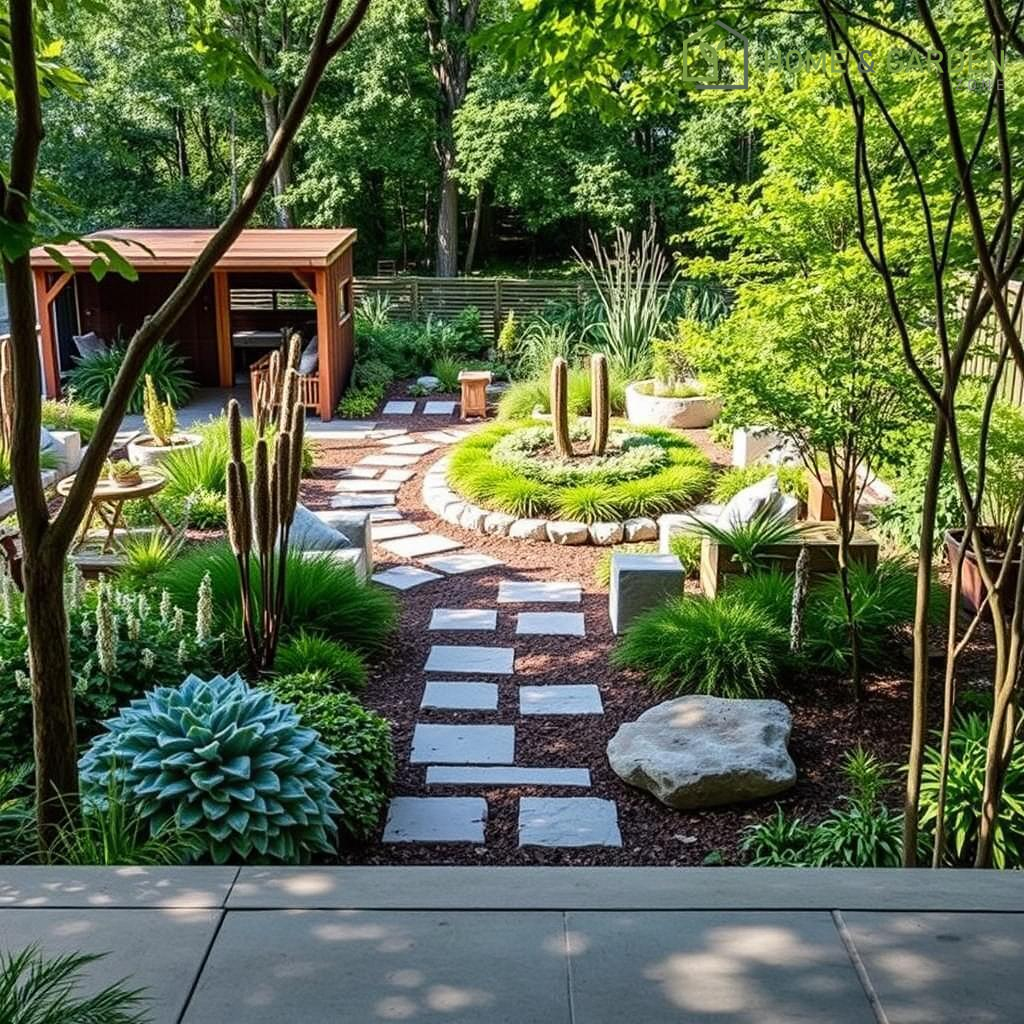
The Evolution of a Landscape: Veddw's "New Garden" Emerges
The continuous evolution of Veddw Garden, a celebrated landscape in Monmouthshire, Wales, is a testament to the dynamic interplay between vision, experimentation, and adaptation. Among its many narratives, the creation of "The New Garden," chronicled in "Part 20" of the garden's extensive documentation, highlights a significant transformation of what was once an overlooked and intermittently planted area.
For an extended period, the designated site for "The New Garden" remained largely unassigned to a definitive purpose. Early, somewhat whimsical attempts at cultivation, such as an ambitious but ultimately unsuccessful venture into growing an entire garden of barley, underscore the experimental spirit that has long defined Veddw. This period of dormancy and tentative exploration is not uncommon in large-scale garden development, often preceding the emergence of a clear design philosophy for a particular section.
From Void to Vision: Crafting a Unique Space
The conceptualization of "The New Garden" marked a pivotal shift from an empty expanse to a deliberate design. While specific planting details for "Part 20" are often revealed through ongoing updates and photographic essays from Veddw, the underlying principle involves a thoughtful consideration of form, texture, and ecological suitability. The blue arrow referenced in initial descriptions symbolically points to a location ripe for imaginative intervention, indicating a designated area for focused horticultural development.
The Veddw Garden, under the stewardship of Anne Wareham and Charles Hawes, is renowned for its distinctive style, often challenging conventional gardening aesthetics. Its development is meticulously documented, offering insights into the decisions, successes, and occasional reconsiderations that shape a significant landscape. "The New Garden" chapter contributes to this rich tapestry, illustrating the careful planning and intuitive responses required to integrate a new section seamlessly within an established, yet ever-evolving, framework.
Summary
The creation of "The New Garden" at Veddw represents a deliberate and considered phase in the garden's ongoing development. Emerging from a previously undefined space, this section embodies Veddw's characteristic blend of innovative design, practical experimentation, and deep engagement with the landscape. It stands as a testament to the iterative process of garden making, where initial ambiguities yield to focused vision, ultimately contributing to the garden's unique identity and enduring appeal.
Resources
Details
Author



Latest articles



 }})
You can now watch HBO Max for $10
The Evolution of a Landscape: Veddw's "New Garden" Emerges
The continuous evolution of Veddw Garden, a celebrated landscape in Monmouthshire, Wales, is a testament to the dynamic interplay between vision, experimentation, and adaptation. Among its many narratives, the creation of "The New Garden," chronicled in "Part 20" of the garden's extensive documentation, highlights a significant transformation of what was once an overlooked and intermittently planted area.
For an extended period, the designated site for "The New Garden" remained largely unassigned to a definitive purpose. Early, somewhat whimsical attempts at cultivation, such as an ambitious but ultimately unsuccessful venture into growing an entire garden of barley, underscore the experimental spirit that has long defined Veddw. This period of dormancy and tentative exploration is not uncommon in large-scale garden development, often preceding the emergence of a clear design philosophy for a particular section.
From Void to Vision: Crafting a Unique Space
The conceptualization of "The New Garden" marked a pivotal shift from an empty expanse to a deliberate design. While specific planting details for "Part 20" are often revealed through ongoing updates and photographic essays from Veddw, the underlying principle involves a thoughtful consideration of form, texture, and ecological suitability. The blue arrow referenced in initial descriptions symbolically points to a location ripe for imaginative intervention, indicating a designated area for focused horticultural development.
The Veddw Garden, under the stewardship of Anne Wareham and Charles Hawes, is renowned for its distinctive style, often challenging conventional gardening aesthetics. Its development is meticulously documented, offering insights into the decisions, successes, and occasional reconsiderations that shape a significant landscape. "The New Garden" chapter contributes to this rich tapestry, illustrating the careful planning and intuitive responses required to integrate a new section seamlessly within an established, yet ever-evolving, framework.
Summary
The creation of "The New Garden" at Veddw represents a deliberate and considered phase in the garden's ongoing development. Emerging from a previously undefined space, this section embodies Veddw's characteristic blend of innovative design, practical experimentation, and deep engagement with the landscape. It stands as a testament to the iterative process of garden making, where initial ambiguities yield to focused vision, ultimately contributing to the garden's unique identity and enduring appeal.
Resources
Latest articles
You can now watch HBO Max for $10
Similar posts

This is a page that only logged-in people can visit. Don't you feel special? Try clicking on a button below to do some things you can't do when you're logged out.
Example modal
At your leisure, please peruse this excerpt from a whale of a tale.
Chapter 1: Loomings.
Call me Ishmael. Some years ago—never mind how long precisely—having little or no money in my purse, and nothing particular to interest me on shore, I thought I would sail about a little and see the watery part of the world. It is a way I have of driving off the spleen and regulating the circulation. Whenever I find myself growing grim about the mouth; whenever it is a damp, drizzly November in my soul; whenever I find myself involuntarily pausing before coffin warehouses, and bringing up the rear of every funeral I meet; and especially whenever my hypos get such an upper hand of me, that it requires a strong moral principle to prevent me from deliberately stepping into the street, and methodically knocking people's hats off—then, I account it high time to get to sea as soon as I can. This is my substitute for pistol and ball. With a philosophical flourish Cato throws himself upon his sword; I quietly take to the ship. There is nothing surprising in this. If they but knew it, almost all men in their degree, some time or other, cherish very nearly the same feelings towards the ocean with me.
Comment