Crafting Elegance: Constructing a Yakisugi Display Stand from a Single Plank of Cedar
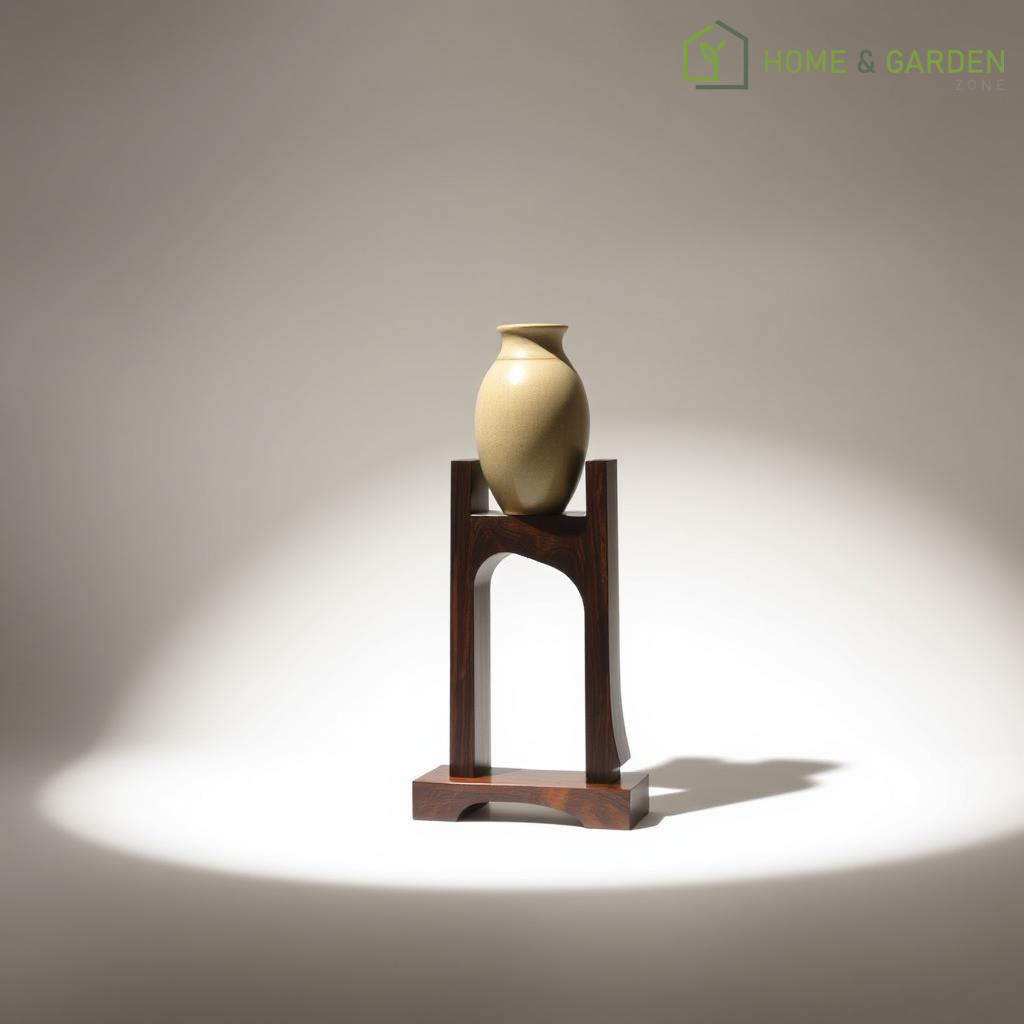
The ancient Japanese art of Yakisugi, often referred to as Shou Sugi Ban, offers a profound method for preserving and beautifying wood through controlled charring. Beyond its traditional architectural applications, this technique provides an unparalleled aesthetic for smaller, more intricate projects. This investigative piece explores the meticulous process of fashioning an elegant display stand from a solitary plank of cedar, transforming humble timber into a striking piece of functional art.
The Philosophy of Yakisugi for Modern Craft
Yakisugi is not merely about burning wood; it is a deliberate process that enhances the material's inherent qualities. The controlled charring process not only renders the wood more resistant to insects, rot, and fire but also brings forth a unique, deeply textured surface. For a display stand, this translates into a piece that exudes both rugged durability and sophisticated visual appeal, making it an ideal focal point for cherished objects.
Selecting Your Material: The Cedar Advantage
The choice of wood is paramount. Cedar, particularly Western Red Cedar, is favored for Yakisugi due to its open cellular structure, which allows for an even char. Its natural oils also contribute to its resilience and provide a distinct, aromatic quality that complements the charring process. A single, high-quality plank, free of significant knots or defects, ensures structural integrity and a uniform finish for the display stand.
Essential Tools and Preparation
Crafting a Yakisugi display stand demands precision and respect for the material. The primary tools include a propane torch with a broad flame nozzle, a stiff wire brush, a natural-bristle brush, and a suitable wood sealant or oil. Safety gear, including heat-resistant gloves, eye protection, and a fire extinguisher, is non-negotiable. Before charring, the cedar plank should be cut to the desired dimensions and lightly sanded to ensure a smooth, clean surface for charring.
The Charring Process: A Dance with Fire
The core of Yakisugi lies in the careful application of heat. The propane torch is used to systematically char the wood surface until a thick, alligator-skin-like layer of charcoal forms. Consistency is key; uneven charring can result in an inconsistent finish. This stage requires patience, allowing the flame to work its magic without rushing the process. For a display stand, charring all exposed surfaces will create a cohesive aesthetic.
Revealing the Beauty: Cleaning and Finishing
Once charred, the wood is allowed to cool completely. The next step involves vigorously brushing off the loose soot with a wire brush, revealing the beautifully textured grain underneath. This step is critical for defining the unique character of the Yakisugi. Following the wire brushing, a softer natural-bristle brush removes any remaining fine dust. Finally, a protective finish—such as a natural oil (like tung or linseed oil) or a clear sealant—is applied. This finish not only deepens the wood’s color and protects the charred surface but also locks in the unique aroma of the cedar, ensuring the stand's longevity and tactile pleasure.
Summary
The creation of a Yakisugi display stand from a single cedar plank is an exercise in transformative craftsmanship. It marries an ancient Japanese technique with modern minimalist design, resulting in a piece that is both visually arresting and remarkably durable. This project stands as a testament to the power of deliberate technique to elevate raw material into an object of refined beauty and utility, perfectly suited for showcasing cherished items within any high-end interior.
Resources
Details
Author




Latest articles




 }})
You can now watch HBO Max for $10
The ancient Japanese art of Yakisugi, often referred to as Shou Sugi Ban, offers a profound method for preserving and beautifying wood through controlled charring. Beyond its traditional architectural applications, this technique provides an unparalleled aesthetic for smaller, more intricate projects. This investigative piece explores the meticulous process of fashioning an elegant display stand from a solitary plank of cedar, transforming humble timber into a striking piece of functional art.
The Philosophy of Yakisugi for Modern Craft
Yakisugi is not merely about burning wood; it is a deliberate process that enhances the material's inherent qualities. The controlled charring process not only renders the wood more resistant to insects, rot, and fire but also brings forth a unique, deeply textured surface. For a display stand, this translates into a piece that exudes both rugged durability and sophisticated visual appeal, making it an ideal focal point for cherished objects.
Selecting Your Material: The Cedar Advantage
The choice of wood is paramount. Cedar, particularly Western Red Cedar, is favored for Yakisugi due to its open cellular structure, which allows for an even char. Its natural oils also contribute to its resilience and provide a distinct, aromatic quality that complements the charring process. A single, high-quality plank, free of significant knots or defects, ensures structural integrity and a uniform finish for the display stand.
Essential Tools and Preparation
Crafting a Yakisugi display stand demands precision and respect for the material. The primary tools include a propane torch with a broad flame nozzle, a stiff wire brush, a natural-bristle brush, and a suitable wood sealant or oil. Safety gear, including heat-resistant gloves, eye protection, and a fire extinguisher, is non-negotiable. Before charring, the cedar plank should be cut to the desired dimensions and lightly sanded to ensure a smooth, clean surface for charring.
The Charring Process: A Dance with Fire
The core of Yakisugi lies in the careful application of heat. The propane torch is used to systematically char the wood surface until a thick, alligator-skin-like layer of charcoal forms. Consistency is key; uneven charring can result in an inconsistent finish. This stage requires patience, allowing the flame to work its magic without rushing the process. For a display stand, charring all exposed surfaces will create a cohesive aesthetic.
Revealing the Beauty: Cleaning and Finishing
Once charred, the wood is allowed to cool completely. The next step involves vigorously brushing off the loose soot with a wire brush, revealing the beautifully textured grain underneath. This step is critical for defining the unique character of the Yakisugi. Following the wire brushing, a softer natural-bristle brush removes any remaining fine dust. Finally, a protective finish—such as a natural oil (like tung or linseed oil) or a clear sealant—is applied. This finish not only deepens the wood’s color and protects the charred surface but also locks in the unique aroma of the cedar, ensuring the stand's longevity and tactile pleasure.
Summary
The creation of a Yakisugi display stand from a single cedar plank is an exercise in transformative craftsmanship. It marries an ancient Japanese technique with modern minimalist design, resulting in a piece that is both visually arresting and remarkably durable. This project stands as a testament to the power of deliberate technique to elevate raw material into an object of refined beauty and utility, perfectly suited for showcasing cherished items within any high-end interior.
Resources
Latest articles
You can now watch HBO Max for $10
Similar posts

This is a page that only logged-in people can visit. Don't you feel special? Try clicking on a button below to do some things you can't do when you're logged out.
Example modal
At your leisure, please peruse this excerpt from a whale of a tale.
Chapter 1: Loomings.
Call me Ishmael. Some years ago—never mind how long precisely—having little or no money in my purse, and nothing particular to interest me on shore, I thought I would sail about a little and see the watery part of the world. It is a way I have of driving off the spleen and regulating the circulation. Whenever I find myself growing grim about the mouth; whenever it is a damp, drizzly November in my soul; whenever I find myself involuntarily pausing before coffin warehouses, and bringing up the rear of every funeral I meet; and especially whenever my hypos get such an upper hand of me, that it requires a strong moral principle to prevent me from deliberately stepping into the street, and methodically knocking people's hats off—then, I account it high time to get to sea as soon as I can. This is my substitute for pistol and ball. With a philosophical flourish Cato throws himself upon his sword; I quietly take to the ship. There is nothing surprising in this. If they but knew it, almost all men in their degree, some time or other, cherish very nearly the same feelings towards the ocean with me.
Comment