Vladimir Radutny Architects Unveils Chicago Loft Renovation Celebrating Industrial Heritage and "Poetic Relics"
Embracing the Past: A Loft Reimagined in Chicago
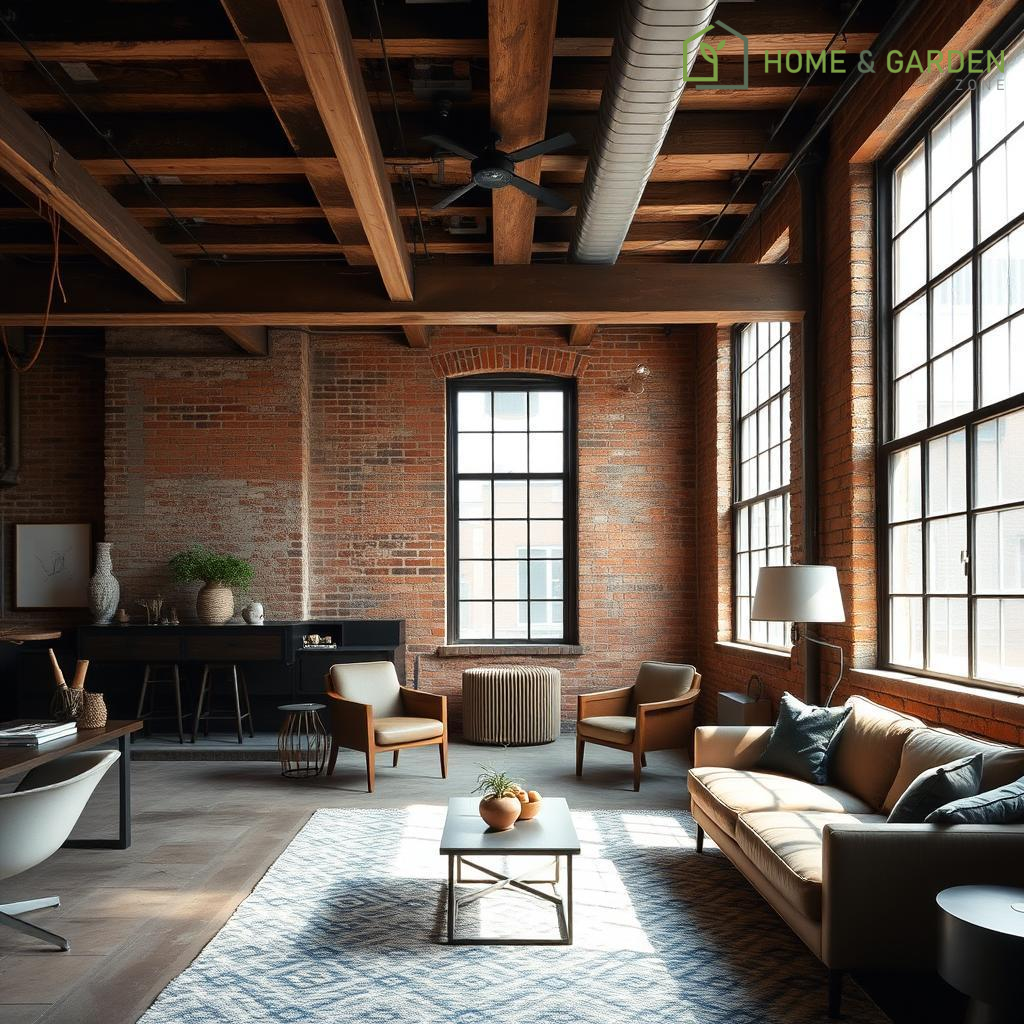
In a compelling demonstration of architectural sensitivity, US studio Vladimir Radutny Architects has completed a significant renovation of a 1,200-square-foot (111-square-metre) loft in Chicago. Housed within a structure that once functioned as a car-part manufacturing facility, the project stands out for its deliberate effort to honor and expose the building's industrial origins, transforming what Radutny himself describes as "poetic relics" into integral design elements.
The building's conversion to residential units two decades prior set the stage for this latest intervention. Vladimir Radutny Architects approached the dwelling with a clear vision: to peel back layers of previous alterations and reveal the inherent character of the industrial shell. This meticulous process brought to light original tiles and robust brickwork, elements that narrate the building's history and provide a powerful counterpoint to modern additions.
Design Philosophy: Revealing Hidden Narratives
The core of the design philosophy revolved around the concept of revelation. Rather than erasing the past, the architects sought to integrate it seamlessly into a contemporary living space. The exposed materials—the texture of old brick, the geometric patterns of forgotten tiles—are not merely decorative; they are artifacts that ground the inhabitants in the building's unique timeline. This approach eschews superficial trends, opting instead for a deeper connection to the structure's material memory.
Adding a contemporary layer while respecting the existing fabric, the renovation introduces elements such as chainmail curtains. This unexpected material choice serves multiple functions: it offers a degree of privacy and light diffusion without fully obscuring the industrial backdrop, and its metallic sheen subtly echoes the building's manufacturing past. The interplay between raw, historic surfaces and refined, modern interventions creates a dynamic tension, resulting in a space that feels both rooted and forward-looking.
Summary
Vladimir Radutny Architects' Chicago loft renovation is a masterclass in adaptive reuse and historical appreciation. By deliberately exposing and highlighting elements like original tiles and brickwork, and thoughtfully integrating contemporary features such as chainmail curtains, the project successfully transforms a former industrial space into a modern dwelling that deeply respects its heritage. The renovation provides a blueprint for how architects can engage with existing structures, finding and celebrating the "poetic relics" that tell a building's unique story, ultimately creating spaces that are rich in character and history.
Resources
- Dezeen
- Architect Magazine
- ArchDaily
Details
Author




Latest articles





 }})
You can now watch HBO Max for $10
Embracing the Past: A Loft Reimagined in Chicago
In a compelling demonstration of architectural sensitivity, US studio Vladimir Radutny Architects has completed a significant renovation of a 1,200-square-foot (111-square-metre) loft in Chicago. Housed within a structure that once functioned as a car-part manufacturing facility, the project stands out for its deliberate effort to honor and expose the building's industrial origins, transforming what Radutny himself describes as "poetic relics" into integral design elements.
The building's conversion to residential units two decades prior set the stage for this latest intervention. Vladimir Radutny Architects approached the dwelling with a clear vision: to peel back layers of previous alterations and reveal the inherent character of the industrial shell. This meticulous process brought to light original tiles and robust brickwork, elements that narrate the building's history and provide a powerful counterpoint to modern additions.
Design Philosophy: Revealing Hidden Narratives
The core of the design philosophy revolved around the concept of revelation. Rather than erasing the past, the architects sought to integrate it seamlessly into a contemporary living space. The exposed materials—the texture of old brick, the geometric patterns of forgotten tiles—are not merely decorative; they are artifacts that ground the inhabitants in the building's unique timeline. This approach eschews superficial trends, opting instead for a deeper connection to the structure's material memory.
Adding a contemporary layer while respecting the existing fabric, the renovation introduces elements such as chainmail curtains. This unexpected material choice serves multiple functions: it offers a degree of privacy and light diffusion without fully obscuring the industrial backdrop, and its metallic sheen subtly echoes the building's manufacturing past. The interplay between raw, historic surfaces and refined, modern interventions creates a dynamic tension, resulting in a space that feels both rooted and forward-looking.
Summary
Vladimir Radutny Architects' Chicago loft renovation is a masterclass in adaptive reuse and historical appreciation. By deliberately exposing and highlighting elements like original tiles and brickwork, and thoughtfully integrating contemporary features such as chainmail curtains, the project successfully transforms a former industrial space into a modern dwelling that deeply respects its heritage. The renovation provides a blueprint for how architects can engage with existing structures, finding and celebrating the "poetic relics" that tell a building's unique story, ultimately creating spaces that are rich in character and history.
Resources
- Dezeen
- Architect Magazine
- ArchDaily
Latest articles
You can now watch HBO Max for $10
Similar posts




This is a page that only logged-in people can visit. Don't you feel special? Try clicking on a button below to do some things you can't do when you're logged out.
Example modal
At your leisure, please peruse this excerpt from a whale of a tale.
Chapter 1: Loomings.
Call me Ishmael. Some years ago—never mind how long precisely—having little or no money in my purse, and nothing particular to interest me on shore, I thought I would sail about a little and see the watery part of the world. It is a way I have of driving off the spleen and regulating the circulation. Whenever I find myself growing grim about the mouth; whenever it is a damp, drizzly November in my soul; whenever I find myself involuntarily pausing before coffin warehouses, and bringing up the rear of every funeral I meet; and especially whenever my hypos get such an upper hand of me, that it requires a strong moral principle to prevent me from deliberately stepping into the street, and methodically knocking people's hats off—then, I account it high time to get to sea as soon as I can. This is my substitute for pistol and ball. With a philosophical flourish Cato throws himself upon his sword; I quietly take to the ship. There is nothing surprising in this. If they but knew it, almost all men in their degree, some time or other, cherish very nearly the same feelings towards the ocean with me.
Comment